A research project funded by the Dutch Research Council (NWO), exploring the fundamental tension between secrecy claims and transparency needs in the context of EU digital and data legislation. Stay tuned for updates from the project as well as scholarly and regulatory developments and news.
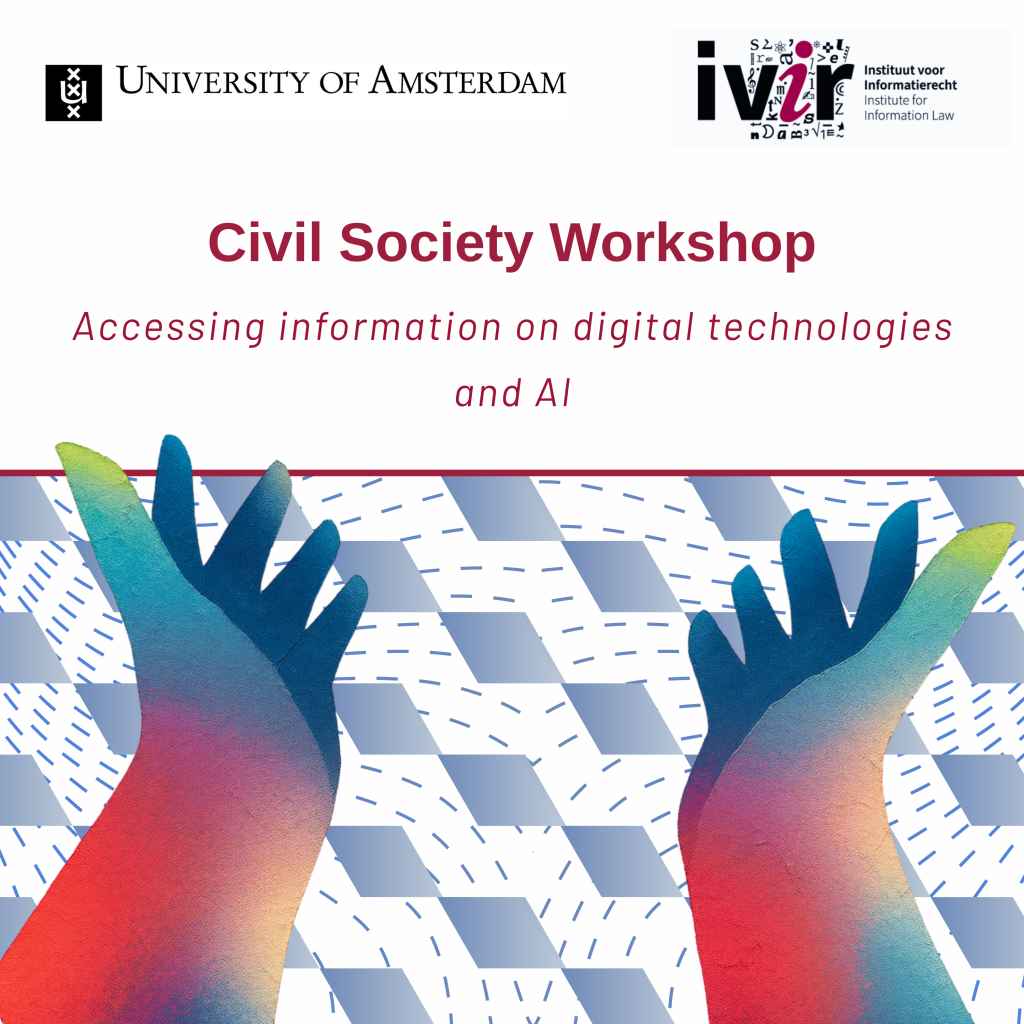
As part of our NWO-funded project ‘Artificial Secrecy’, we are very excited to be hosting at the Institute for Information Law (IViR) a Civil Society Workshop in collaboration with the Digital Freedom Fund. On the 7th of October, several European civil society organisations will join us in conversations on legal and technical obstacles, as well as alternative avenues for accessing data and information on AI and digital technologies.
Looking forward to discovering what challenges and barriers these actors face and finally meeting in person at IViR.
Thank you kindly to the Digital Freedom Fund, Dr. Kristina Irion and Dr. Plixavra Vogiatzoglou for helping in bringing such a diverse pool of experts together!
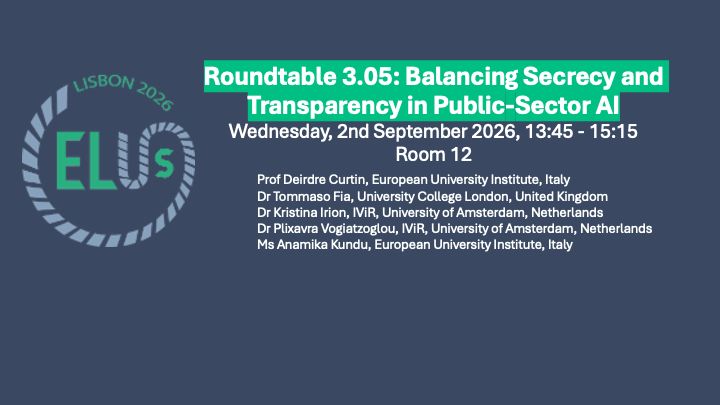
Panel 3.05: Roundtable – Balancing Secrecy and Transparency in Public-Sector AI
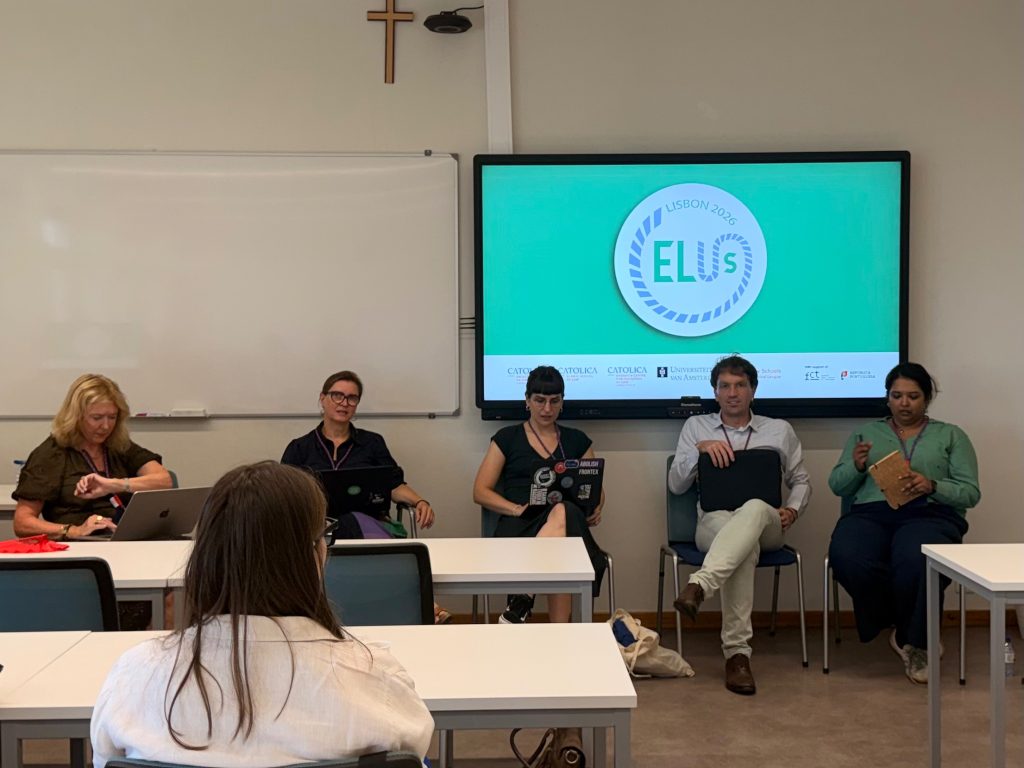
This roundtable explored the institutional, legal and societal drivers of secrecy of AI systems, their interplay with transparency and their implications for public governance. The debate considered the relevant frameworks (across the EU digital rulebook) that build both secrecy and transparency, and discussed approaches to (re-)shaping transparency in the public interest. In doing so, it touched on the different sectors and areas of interest and teased out the broader implications and lessons for a more sensible equilibrium between public and private interests in governing public-sector AI in the EU.
The session was chaired by Professor Deirdre Curtin (EUI), in conversation with Dr. Kristina Irion (IViR), Dr. Plixavra Vogiatzoglou (IViR), Dr. Tommaso Fia (UCL), and PhD Researcher Anamika Kundu (EUI).
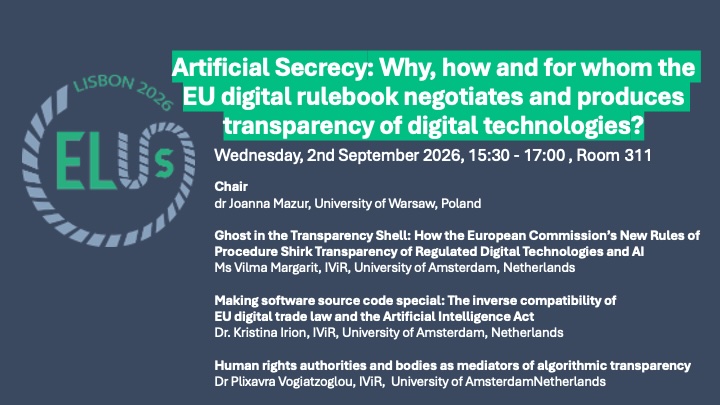
Panel 4.20: Artificial Secrecy: Why, how and for whom the EU digital rulebook negotiates and produces transparency of digital technologies?
This panel explored pertinent questions at the transparency versus confidentiality nexus, including: how do regulatory authorities, in particular the European Commission, apply freedom of information laws when confidentiality and trade secret claims are raised; how a digital trade law provision protecting source code of software is used to weaken the AI Act’s rules on market conformity assessments and supervision of AI systems; how human rights authorities and bodies can harness their powers to access commercial information necessary for algorithmic transparency. Underlying these is the fundamental question of how EU law negotiates transparency and confidentiality in relation to regulated digital technologies, and whether this can effectively mitigate the power asymmetries between citizens, public-interest bodies, and private actors with strong commercial interests.
The session was chaired by Joanna Mazur (University of Warsaw), in conversation with Dr. Kristina Irion (IViR), Dr. Plixavra Vogiatzoglou (IViR), and PhD Candidate Vilma Margarit (IViR).
Delangue, whose company provides a database of AI models to developers, called for a fully transparent review of the incident, which has led to expressions of concern over safety standards at OpenAI and within frontier AI labs.
Writing that he had asked for “radical transparency” from OpenAI, Delangue said: “Let’s release the traces from the ‘rogue’ agents so the entire research community can study what happened.” Calling for extra funding from OpenAI to build protection against AI, he added: “Let’s commit $100M in compute from OAI to help the Hugging Face community build powerful cyber defenses with the best open and closed models.”